
WELCOME BONUS 300%
UP TO €2000 + 100
FREE SPINS
UP TO €2000 + 100
FREE SPINS
Home → Blackjack
Blackjack at Smash Casino
When Can You Raise Your Bet?
Doubling down on any first two cards is the main moment to raise the stake, and doubling after a split adds about 0.14 percentage points to RTP. The rule allows the stake to be doubled with one extra card, so a €10 bet becomes €20 on the table.
Splitting a pair follows a similar logic: up to 4 hands can be created, and resplitting aces improves RTP by 0.08 percentage points. Split aces usually receive one card each, which limits how far that extra stake can be pushed.
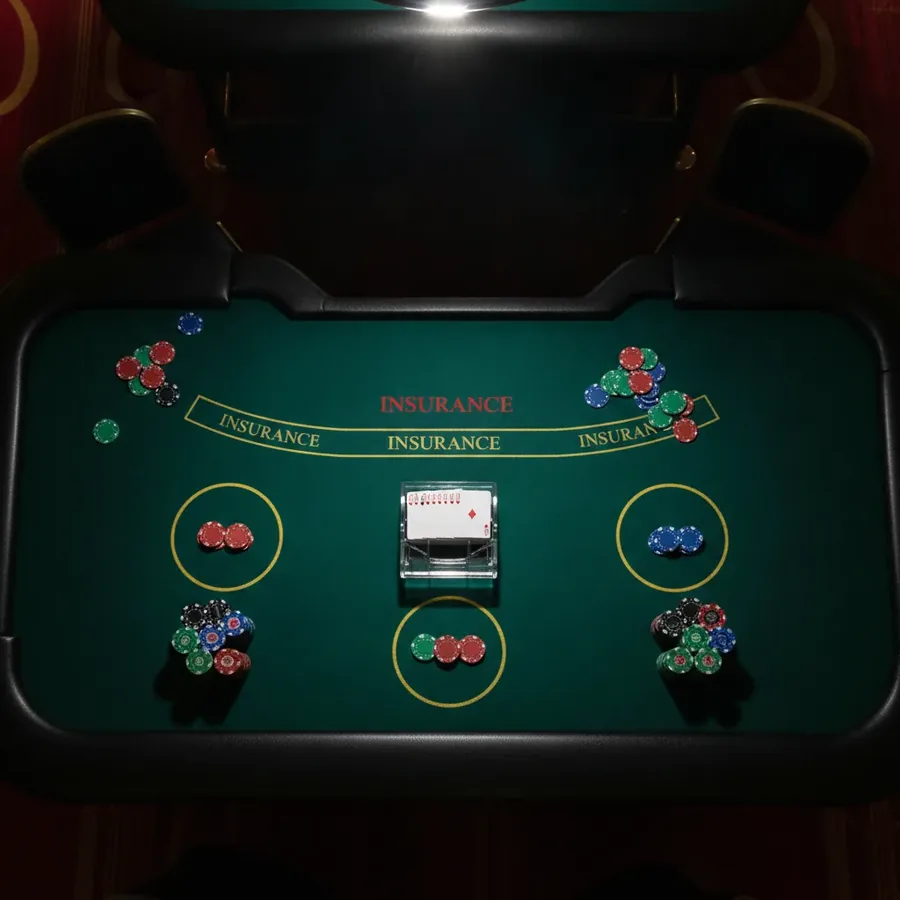
Insurance is the exception, not an increase worth taking: it pays 2:1 but carries RTP 92.53% and a house edge of 7.47% on the side bet. On a €10 main bet the maximum insurance stake is €5, and basic strategy declines it except for card counters at a true count of at least +3.
What a Natural Blackjack Actually Pays
A natural blackjack pays 3:2, so a €10 bet returns €15, while a 6:5 payout returns only €12 on the same stake. The 6:5 version reaches RTP 98.15% and a house edge of 1.85%, against 99.54% and 0.46% for the 3:2 six-deck game.
Replacing 3:2 with 6:5 adds exactly 1.39 percentage points to the casino's edge, more than any other single rule change. A regular win still pays 1:1 in both versions, so the difference only shows up when the first two cards make 21.
On a single-deck game with classic rules and a 3:2 payout, RTP reaches 99.85% and the house edge is 0.15%, because one deck is worth about 0.48 percentage points against eight decks. That advantage is often offset when the same table pays 6:5 instead of 3:2.
Insurance vs Even Money When You Hold Blackjack
Insurance is a separate side bet of up to 50% of the main bet, placed when the dealer shows an ace, and it pays 2:1. Its RTP is 92.53% with a house edge of 7.47%, so a €10 main bet allows at most €5 of insurance.
Basic strategy always declines insurance, except for card counters at a true count of at least +3. With a single deck the house edge on that side bet falls to about 5.88%, which is still far above the 0.46% of the six-deck S17 main game.
On a €10 stake the side bet risks €5 to return €10 plus the €5 stake, but the long-run return of 92.53% means €100 of insurance stakes cost €7.47 on average. The 3:2 natural, by contrast, pays €15 on the same €10 main bet.
Ignoring the Basic Strategy Chart: 1 Percent Wasted
The 99.54% RTP of the six-deck S17, DAS and DOA game assumes basic strategy is followed on every hand. Without it the return drops by roughly 1 percentage point, so €100 of stakes costs about €1 more than the €0.46 the house edge would otherwise take.
Blackjack Liberal Vegas Strip reaches RTP 99.72% with S17, DAS, resplit and late surrender, and its standard deviation is 1.15. Late surrender alone improves RTP by about 0.08 percentage points, because the player gives up the hand after the dealer checks for blackjack and loses only half the stake.
Early surrender is worth up to 0.6 percentage points but is extremely rare, so the chart stays the practical tool. The live variant Quantum Blackjack Plus from Playtech reaches RTP 99.57% with optimal strategy, which shows how much the correct decision on each hand matters.
Blackjack variants at a glance
| Variant | Payout | House edge | Rule | RTP |
|---|---|---|---|---|
| Blackjack Insurance (6–8 decks) | Insurance 2:1 | 7.47% | Separate side bet of up to 50% of the main bet when the dealer shows an ace. Basic strategy ALWAYS declines it (except for card counters at a true count ≥ +3). With a single deck the edge is ≈ 5.88% | 92.53% |
| Blackjack Surrender (late surrender) – rule effect | 50% of the stake returned | −0.08 percentage points | The player gives up the hand after the dealer has checked for blackjack and loses half the stake. Improves RTP by about 0.08 percentage points. Early surrender is worth much more (up to −0.6 percentage points) but is extremely rare. | n/a (rule modifier) |
| Blackjack Liberal Vegas Strip (liberal rules, 3:2) | Blackjack 3:2, win 1:1 | 0.28% | The most player-friendly rule set: S17 + DAS + resplit + late surrender. Standard deviation 1.15 | 99.72% |
| Blackjack Split / double / H17 – rule effects | Double – stake ×2 with one card; split – up to 4 hands; split aces usually get one card each. | H17 +0.22 percentage points; RSA −0.08 percentage points; DAS −0.14 percentage points | Dealer hitting soft 17 lowers RTP by 0.22 percentage points; resplitting aces improves it by 0.08 percentage points; doubling after a split improves it by about 0.14 percentage points; 6 decks instead of 8 – about 0.02 percentage points. | n/a (rule modifiers) |
| Blackjack 6:5 payout instead of 3:2 (6 decks) | Blackjack 6:5, win 1:1 | 1.85% | Replacing 3:2 with 6:5 adds exactly +1.39 percentage points to the casino's edge – more than any other rule change. On a €10 bet a blackjack pays €12 instead of €15. | 98.15% |
| Blackjack Single deck, classic rules, 3:2 | Blackjack 3:2, win 1:1 | 0.15% | Fewer decks = lower edge; one deck gives about −0.48 percentage points compared with 8 decks. Often offset by a 6:5 payout. | 99.85% |
Which Rule Variants the Software Shows
Blackjack Liberal Vegas Strip carries an RTP of 99.72% and a house edge of just 0.28%, making it the most player-friendly rule set in the comparison. The package combines dealer standing on soft 17, doubling after a split, resplitting and late surrender in one variant. On a €100 stake the expected long-run loss is only €0.28, which is roughly a sixth of the loss on the standard six-deck game.
Blackjack 6:5 replaces the classic 3:2 payout with a reduced blackjack reward and shows an RTP of 98.15%, with a house edge of 1.85%. The rule change alone adds exactly +1.39 percentage points to the casino's edge, more than any other rule modification listed. A €10 bet that would pay €15 with a 3:2 blackjack instead returns €12, so the player loses €3 of value on every natural.
The split and double rules act as modifiers rather than full variants. Dealer hitting soft 17 lowers RTP by 0.22 percentage points, while resplitting aces improves it by 0.08 percentage points and doubling after a split improves it by about 0.14 percentage points. Moving from 8 decks to 6 decks is worth only about 0.02 percentage points, a tiny change compared with the 6:5 payout penalty.
A Side Bet Every Round: The Budget Lasts 30 Rounds
Insurance on a 6 to 8 deck blackjack game carries an RTP of only 92.53% and a house edge of 7.47%, the worst figure among the listed blackjack options. The side bet is capped at 50% of the main stake and pays 2:1 when the dealer shows an ace and then makes blackjack. Basic strategy always declines the insurance wager except for card counters at a true count of +3 or higher.
Infinite Blackjack from Evolution offers four side bets named Any Pair, 21+3, Hot 3 and Bust It, with a main-game RTP of 99.47% under optimal play. The game allows unlimited seats at the table and accepts bets from €1 to €5,000 per round. A player staking €100 per round on the main bet faces an average loss of €0.53 per round before any side bet is added.
Quantum Blackjack Plus Live from Playtech adds Quantum multipliers of up to 1,000x on three-card combinations that total 21 points. The game lists an RTP of 99.57% with optimal strategy and a bet range of €1 to €5,000. A budget of €300 used in €10 increments lasts exactly 30 rounds before multipliers or side bets are considered, which makes the multiplier feature a volatility driver rather than an RTP boost.
What the Hole Card Means at a Live Table
The hole card is the dealer's face-down card at a live blackjack table, checked only after all player hands have completed their actions. In games with late surrender the dealer checks for blackjack first, and the player then gives up the hand and loses half the stake. Late surrender improves RTP by about 0.08 percentage points and is part of the Liberal Vegas Strip rule set.
On a 6-deck game with S17, DAS, DOA and a 3:2 payout, the house edge is 0.46% when basic strategy is applied, which means the hole card check does not change the core math. The dealer stands on soft 17 and doubling after a split is allowed, but no surrender option exists. A €100 stake on this variant loses €0.46 in expectation per round, lower than the 1.85% edge of the 6:5 version.
Single deck with classic rules and a 3:2 payout shows the best main-game RTP at 99.85%, or a house edge of just 0.15%. Fewer decks lower the edge; one deck gives about −0.48 percentage points compared with 8 decks. The hole card procedure remains the same, but the 3:2 payout must be present, because many single-deck tables offset the advantage with a 6:5 blackjack payout.
The Insurance Mistake: 7% Extra House Edge
Insurance on a 6 to 8 deck blackjack game carries a house edge of 7.47% and an RTP of 92.53%, the highest listed edge among all blackjack side options. The wager is a separate side bet of up to 50% of the main bet, offered when the dealer shows an ace. A €50 insurance bet on a €100 main stake returns €100 if the dealer makes blackjack, but the long-run cost is severe.
Basic strategy always declines insurance, with the single exception of card counters facing a true count of +3 or higher. With a single deck the edge is approximately 5.88%, still far worse than the 0.28% house edge of the Liberal Vegas Strip game. The difference between 7.47% and 0.28% is 7.19 percentage points, which is why taking insurance on every dealer ace is described as an error.
The 2:1 insurance payout appears attractive but lowers the return in the long run. On 100 rounds with a €10 insurance bet each time, the expected loss at a 7.47% edge is €74.70. The same €1,000 of insurance stakes on a 0.28% edge blackjack game would cost only €2.80 in expectation, showing that insurance multiplies the casino's share by more than 26 times.
Stop the Session After a 30 Percent Loss
A stop rule fixes a loss limit before the first hand: with a €200 bankroll, 30 percent equals €60, so the session ends once the balance falls to €140. The house edge on Blackjack 6 decks, S17, DAS, DOA, 3:2 payout, basic strategy is 0.46%, meaning €100 of stakes costs about €0.46 on average. At €10 per hand that is roughly 1,300 hands before the expected loss reaches €60, so the limit mostly bites during a bad run.
For comparison, Blackjack 6:5 payout instead of 3:2 (6 decks) carries a house edge of 1.85%, four times the figure of the 3:2 version. The same €60 loss would be reached after about 324 hands at €10 stakes, which is 976 hands fewer than under the 3:2 rule set. A blackjack on a €10 bet pays €12 at 6:5 instead of €15 at 3:2, so three short payouts already cost €9.
One practical step: count the starting balance, multiply it by 0.3 and write the resulting euro figure down before play. On a €200 bankroll the stop sits at €140; on a €500 bankroll it sits at €350. Leaving the table at that point preserves 70 percent of the bankroll, and the 300% welcome bonus up to €2,000 plus 100 free spins does not change the arithmetic of the limit.
One Deck vs Eight Decks: The House Edge Gap
Blackjack Single deck, classic rules, 3:2 runs at an RTP of 99.85% and a house edge of 0.15%. Moving from one deck to eight adds about 0.48 percentage points to that edge, so the single-deck version returns €99.85 per €100 staked while a comparable eight-deck game returns less. The gap is the price of the extra cards in the shoe.
The offset comes from the payout rule, not the deck count. A single-deck table often pays 6:5 instead of 3:2, and replacing 3:2 with 6:5 on six decks adds exactly 1.39 percentage points to the casino's edge, more than any other rule change. On a €10 bet a blackjack pays €12 instead of €15, so three blackjacks cost the player €9.
Step by step: check the payout first, then the deck count. A single-deck game at 3:2 keeps the edge near 0.15%; the same single deck at 6:5 gives back much of that advantage. Blackjack Liberal Vegas Strip, with liberal rules and a 3:2 payout, sits at an RTP of 99.72% and a house edge of 0.28%, which shows how far the rule set, not the shoe size, moves the number.
Stand-on-17 Rule and Its Meaning for Players
A stand-on-17 table means the dealer stops on soft 17, and that rule is written into the Blackjack 6 decks, S17, DAS, DOA, 3:2 payout, basic strategy profile with an RTP of 99.54% and a house edge of 0.46%. Basic strategy is required to reach that figure; without it the same table returns less. The rule is one of several that decide the price of the game.
The alternative is the dealer hitting soft 17, which lowers RTP by 0.22 percentage points according to the rule-effect table. Two other rules move the number in the player's favour: resplitting aces improves RTP by 0.08 percentage points and doubling after a split by about 0.14 percentage points. Six decks instead of eight is worth about 0.02 percentage points.
Step by step: count the rule effects before sitting down. S17 keeps the edge at 0.46%; H17 pushes it to about 0.68% on the same six decks. Doubling after a split gives back roughly 0.14 percentage points, and resplitting aces another 0.08, so a table with all three rules comes close to the Liberal Vegas Strip profile at 99.72% RTP and a 0.28% edge.
Clicked Too Late? The Hand Stands Automatically
When a decision timer expires, the software holds the hand at its current total, and that outcome is the same as standing. In Blackjack Single deck, classic rules, 3:2 with an RTP of 99.85% and a house edge of 0.15%, holding a hard 12 against a dealer 10 is a losing position on average, while holding 20 is not. The rule removes the option to hit, double or split.
The cost of a missed decision depends on the rule set. Under Blackjack 6 decks, S17, DAS, DOA, 3:2 payout, basic strategy the house edge is 0.46%, and doubling after a split alone is worth about 0.14 percentage points of RTP. A player who never doubles because the timer runs out gives up that entire 0.14 percentage points on every applicable hand.
Step by step: note the timer, decide before it runs down, and treat the auto-hold as a stand. On a €10 bet, a missed double on a favourable total forgoes the extra €10 stake and its expected return, which at a 0.46% edge is a small per-hand figure but adds up over hundreds of hands. Insurance, a separate side bet of up to 50% of the main bet at 2:1, is declined by basic strategy in any case.
Bet Two Percent of Your Bankroll per Hand
A flat stake of 2 percent of the bankroll means €4 per hand on a €200 balance and €100 per hand on a €5,000 balance. The bet range at Infinite Blackjack from Evolution is 1 - 5,000 EUR, so the 2 percent rule fits inside the table limits at both ends. Quantum Blackjack Plus Live from Playtech accepts 1 - 5,000 EUR as well.
The house edge decides what that stake costs over time. On Blackjack 6 decks, S17, DAS, DOA, 3:2 payout, basic strategy the edge is 0.46%, so €4 per hand costs about €0.0184 per hand on average, or €1.84 per 100 hands. Blackjack Liberal Vegas Strip, with an RTP of 99.72% and a house edge of 0.28%, costs about €1.12 per 100 hands at the same €4 stake.
Step by step: take the bankroll, multiply by 0.02, and check the result against the table minimum and maximum. On €200 the stake is €4; on €5,000 it is €100. A 30 percent stop at €200 leaves €140, which is 35 hands at €4; the same stop at €5,000 leaves €3,500, which is 35 hands at €100.
Contact
Live - online chat
Banking









Providers












Smash Casino 2026